
The Editorial – Aug 2024
H.G. Wells, who eloquently chronicled world history observed that the world entered a phase of youthfulness during the 6th century. This renewal was sparked by the emergence of revered religious philosophers such as Zarathustra of Iran, Lao Tse and Confucius of China and Gautama Buddha of North India.
These spiritual leaders exemplarily articulated how rulers should govern by upholding human rights, equity and justice in society. However, it is Gautama Buddha who can be credited with introducing a concept of democracy that aligns remarkably well with 21st-century ideals by framing human rights within a socio-political context. Therefore, as Sri Lankans blessed to have inherited the Buddha’s doctrine and the Buddha Sāsana, we should draw upon His teachings to guide our decisions at every crucial juncture.
The earliest concepts of democracy can be found in the ‘Aggañña Sutta’, ‘Cakkavatti Sihanada Sutta’ and ‘Kūtadanta Sutta’ of the ‘Dīgha Nikāya’. In these discourses, the Buddha emphasized that punishment or the death penalty is not the answer to people’s inclination to steal or deceive during times of severe economic crisis or political upheaval. Instead, the Buddha taught that in such situations, a democratic nation should focus on providing essential resources and opportunities for people to develop their talents. This approach creates a liberal economy where people engage in various trades according to their skills and abilities, ultimately leading to a peaceful and stable socio-economic environment in the country.
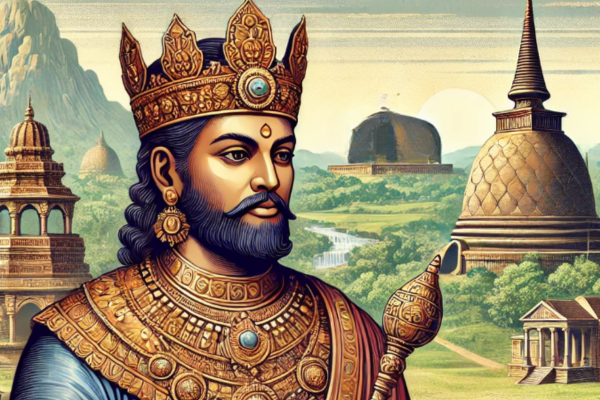
‘Aggañña Sutta’ outlines the essential qualities a ruler should embody. In it, the Buddha highlights a range of virtues necessary for just governance and emphasizes the importance of safeguarding the welfare, ethical standards and freedom of individuals. Further insights into democratic principles are offered in the ‘Cakkavatti Sihanada Sutta’, where the Buddha presents the idea that the ruler is the first citizen of the nation who bears the greatest influence over its progress or decline.
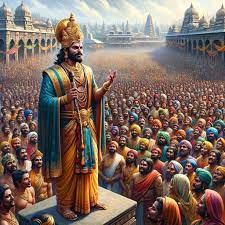 A ruler who governs ethically and follows a righteous path adheres to the core principles of Buddhism. In addition to the well-known Dasa Raja Dharma and ‘Dasa Sakviti Vata’, the Buddha’s teachings on governance also include other key doctrines such as the ‘Sapta Aparihāniya Dharma’, avoidance of the ‘Sathara Agathiya’, the practice of the ‘Sathara Brahma Viharana’, ‘Sathara Sangrahavastu’ and adherence to the ‘Pancashīla Prathipadā’.
According to these doctrines, a ruler is entrusted with the responsibility of ensuring the socio-economic and spiritual well-being of the people. He must be attuned to the needs and aspirations of the entire population, offering protection and support to all citizens not just a privileged few. In line with the Buddha’s teachings, a ruler must lead a virtuous life and refrain from wrongdoing and uphold moral integrity.
Under the concept of Chakravarti governance, kingship is inherited and sustained through unwavering adherence to the ten supreme precepts faithfully.
Sri Lankans are once again approaching an important election and it is evident that many are deeply uncertain about choosing the right leader. We earnestly hope and pray that a leader who upholds the values of Buddhism while promoting religious freedom will be elected one who will continue to safeguard and strengthen the sacred Sambuddha Sasana.
© Satipatthana Magazine