Global Buddhist Leaders Convene for His Holiness the Dalai Lama’s 90th Birthday Celebration in New Delhi
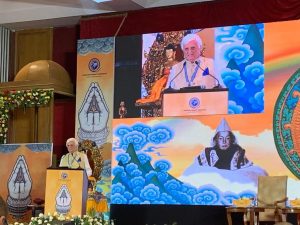
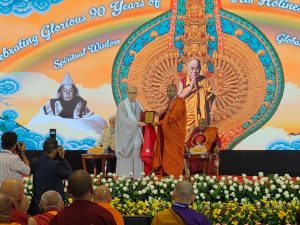
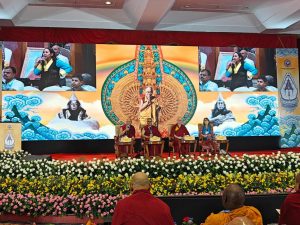
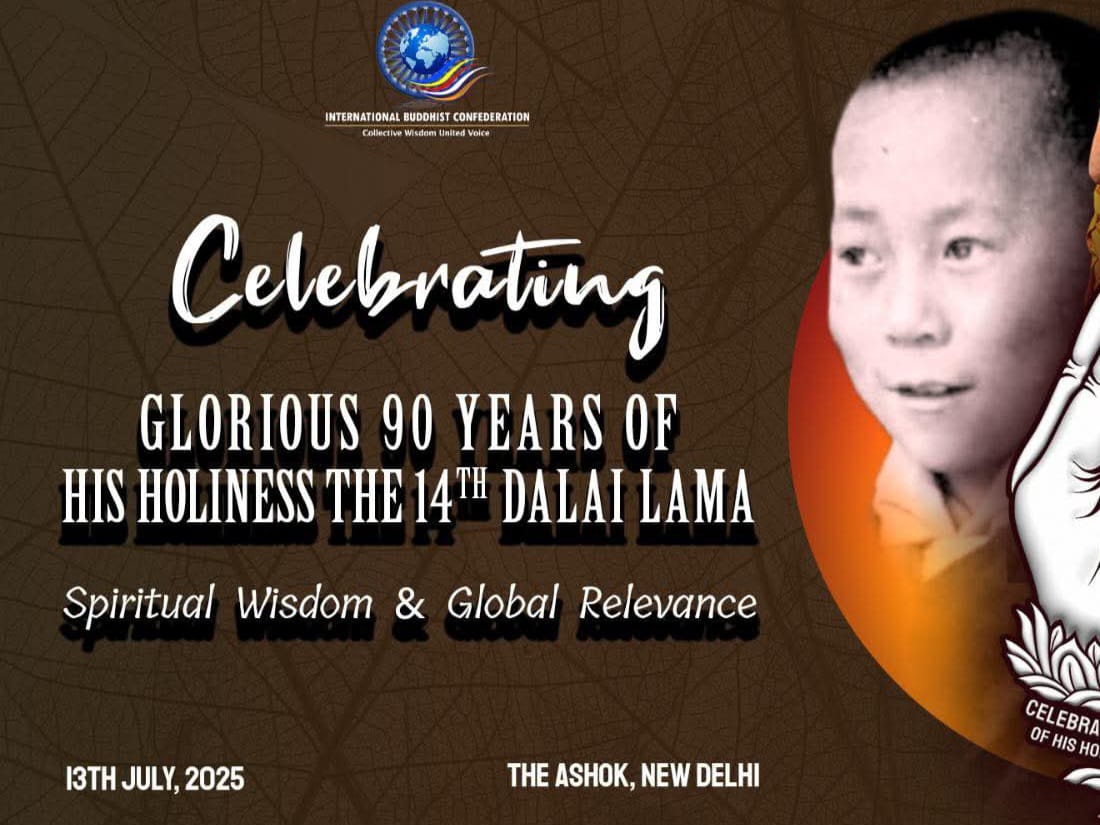
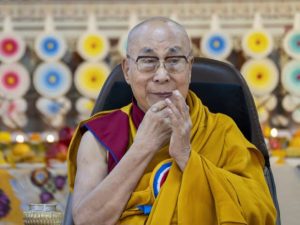
On Sunday, July 13th, the International Buddhist Confederation (IBC) hosted a special conference in New Delhi, India. The event celebrated the 90th birthday of His Holiness the 14th Dalai Lama.
Leading Buddhist thinkers, researchers, and spiritual leaders who have worked closely with the Dalai Lama came together. They discussed important questions about our existence, purpose, and consciousness – topics that are often overlooked in our busy lives. The conference aimed to find answers within the Dalai Lama’s vast knowledge and wisdom.
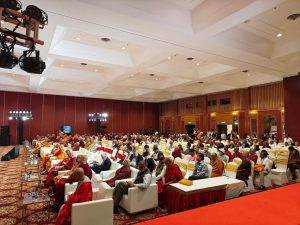
Many high-ranking Buddhist monks from around the world and India also attended the day-long meeting at the Ashoka Hotel.
Science and Spirituality: A Shared Path
As science helps us understand the universe, many people still search for deeper meaning through spiritual reflection. Can science and spirituality, which seem so different, work together? His Holiness the 14th Dalai Lama believes they can and should.
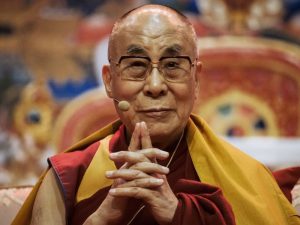
The Dalai Lama is a dedicated follower of Buddha’s teachings and a global symbol of peace. He emphasizes that true change starts within ourselves. He teaches that genuine spirituality means living an ethical life – doing good, avoiding harm, and gaining wisdom.
He also strongly supports critical thinking. The Dalai Lama encourages people to question old beliefs, welcome scientific discoveries, and base their convictions on proven facts. He believes that ignorance is the main cause of human suffering, and we must overcome it through careful thought and self-awareness. A key part of his philosophy is the idea that science and spirituality can exist in harmony.
Key Discussions and Speakers
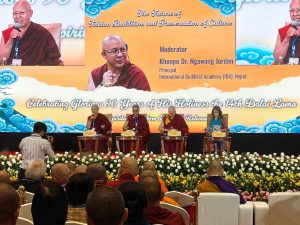
The conference featured discussions on topics such as “Relevance of Buddha Dharma in the 21st Century” and “Future of Tibetan Buddhism and the Preservation of its Culture.” To further explore Buddhist wisdom, philosophy, and modern science, there was also a session on “Quantum Physics, Neurosciences and Buddhism.” This discussion aimed to connect traditional Buddhist practices with scientific evidence.
The event featured many notable speakers:
- Most Venerable Prof. Samdhong Rinpoche (Guest of Honour): A respected scholar, teacher, and philosopher. He is the former Prime Minister of the Central Tibetan Administration and a close advisor to the Dalai Lama. He is known for promoting non-violence.
- Most Venerable Dr. Waskaduwe Mahindawansa Mahanayake Thero (Special Guest from Sri Lanka): Chancellor of the world’s first Pali and Sanskrit Cultural Exchange Centre in Sri Lanka.
- Most Ven. Phrarat VajarasuttiwongDhammalongkornvibhusit Arayawangso (Special Guest from Thailand): An internationally recognized Thai Buddhist monk and senior member of Thailand’s Supreme Sangha Council.
- The 43rd Sakya Trizin Gyana Vajra Rinpoche (Special Guest from Uttarakhand, India): The Vice President of the Sakya Centre, responsible for the welfare and education of monks. He received extensive training in Buddhist philosophy from a young age.
- Prof. Ceon Ramon (University of Washington, USA): An expert in human brain research. He has a Ph.D. in laser physics and quantum optics and is involved in developing techniques to treat brain disorders. He is also interested in Buddhist philosophy and is part of a team studying the connection between Buddhism and neurosciences for mental well-being.
- Khenpo Dr. Ngawang Jorden (Principal, International Buddhist Academy, Nepal): A scholar who completed his monastic studies at 14 and holds an MA and Ph.D. in Buddhist studies from Harvard University.
- His Eminence Sharpa Choeje Rinpoche Jetsun LobsangDorjee Pelsangpo: The 105th Gaden Tripa and the supreme head of the Gelug school of Tibetan Buddhism. He is considered one of the greatest masters of his generation.
- Prof. Sisir Roy (National Institute of Advanced Studies, India): A theoretical physicist whose work includes the foundations of quantum theory, astrophysics, cosmology, and brain function modeling, as well as ancient Indian traditions.
![]()
![]()
![]()
![]()