
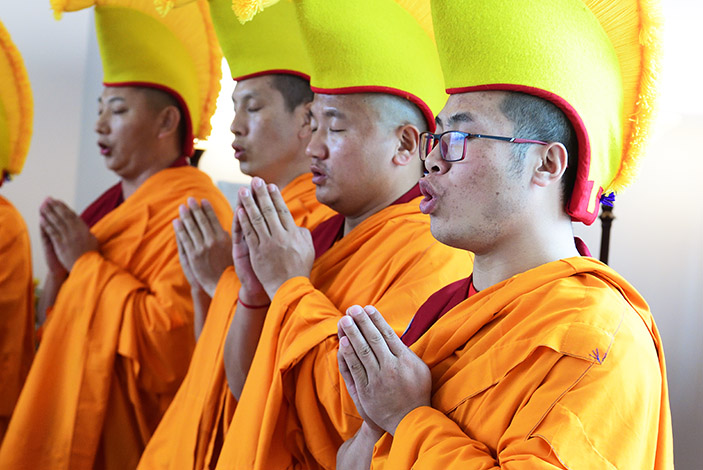
Tibetan bhikkhus are renowned for their exceptional ability to study, comprehend and preserve the teachings of Buddhist philosophy. Typically, a Tibetan monastery houses around 300 to 400 monks, while larger monastic institutions accommodate between 1,000 and 2,000 residents. In 1959, following the brutal invasion of Tibet by China, thousands of Tibetan Buddhist monks, along with their spiritual leader His Holiness the 14th Dalai Lama, the embodiment of universal compassion fled to India in search of refuge. In the years that followed, numerous monasteries were established across India to provide sanctuary and continuity for the monastic tradition. Today, the Tibetan monks residing in these monasteries render an invaluable service to the world.
The daily life of a Tibetan Buddhist monk serves as a living example of disciplined and mindful practice. Their routine is spiritual and practical. Typically, Tibetan monks rise early between 4:30 and 5:00 a.m. and begin their day by cultivating Bodhicitta. Bodhicitta means generating loving-kindness (Mettā) and compassion toward all sentient beings. This simple yet profound practice sets a tone for an altruistic, mindful and peaceful day ahead. Upon waking, monks also reflect on and plan their daily activities with intention and clarity. This habit of purposeful planning is a key aspect of monastic discipline, cultivated from the time of their Sāmanera (novice monk) stage.
 Each day, Tibetan Buddhist monks begin their spiritual activities by offering water to the Buddha. The first prayer session typically begins at 5:00 a.m., announced by the resonant sound of the Gonk which is a traditional instrument with a deep, echoing tone. Senior monks often rise even earlier, around 3:00 a.m. to make offerings and begin their personal prayers. The morning prayer session usually continues until 8:30 a.m., though on certain days, extended prayers and chanting sessions may last until 11:00 a.m. Breakfast is generally taken around 11:00 a.m., after which the monks take a short rest until 2:00 p.m. This balance of spiritual practice, structured routine, and adequate rest contributes significantly to the monks’ mental clarity and overall well-being.
The education of student monks has a significant place. They study a broad range of important subjects including modern academic disciplines, languages, logic, general philosophy and Buddhist philosophy. Monastic schools typically begin at 9:00 a.m. If there are no morning prayers, monks usually have breakfast around 6:00 a.m., which is served in a common dining hall. This promotes a sense of equality and community. After completing their morning prayers, they have their main meal at approximately 11:00 a.m. In Sri Lankan tradition, the food offered to monks is called Dana, while in Tibetan, it is referred to as Sinyam. Although Tibetan monks perform alms rounds, they generally do not do so within the monastery grounds. Within the monastery, meals are taken in a simple, communal manner. At 1:30 p.m., student monks resume their studies, which continue until about 4:30 p.m. Some monks may eat again around this time, while others restrict themselves to liquids only. When lay devotees are present at the monastery, the monks often join their prayer sessions, which typically last until 5:30 or 6:00 p.m. There exists a strong and wholesome bond between the lay community and Tibetan Buddhist monks. The monks actively support the spiritual needs of the laypeople by guiding, advising and helping them walk the path of the Dhamma with sincerity.
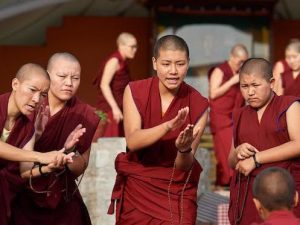
A unique feature of Tibetan monastic life is the evening debate sessions. They begin at 6:00 p.m. These debates, held between two individuals or in groups, aim to deepen understanding of the Dhamma, ensure its preservation and contribute to the holistic formation of a well-rounded Bhikkhu. The first round of debate usually lasts until 7:00 p.m., involving an engaging exchange of philosophical and doctrinal questions between two monks.
The group debates among Tibetan monks usually continue from 7:00 p.m. to 7:30 p.m. These sessions involve active discussion of the Dhamma, where monks engage in reasoning, clarify doubts, and critically analyze doctrinal topics. Dhamma debates serve several key purposes such as,
- Refreshing and reinforcing their memory of the Dhamma
- Resolving uncertainties and attaining a clearer understanding of teachings
- Enhancing logical reasoning and analytical thinking skills
- Exploring the Dhamma in both theoretical and practical dimensions
- Gaining diverse perspectives and shared experiences from fellow monks
- Developing the ability to respond confidently and clearly to questions posed by non-Buddhists
These debates result in a profound transformation of each monk and strengthens both their knowledge and character.
Following the debates, from 7:30 p.m. to 9:30 p.m., all monks gather in open spaces outside their monastic cells to recite and review the Suttas they have studied. Through continuous repetition, they commit these teachings to memory. By 9:30 p.m., the monks return to their individual quarters to rest. This structured routine is followed consistently in Tibetan monasteries. Tibetan Bhikkhus have developed a simple yet effective method to study, internalize and preserve the Dhamma as taught by the Buddha. Their daily routine reflects efficiency, discipline and deep commitment to learning. They exhibit profound knowledge of the Dhamma, alongside commendable moral conduct and intellectual maturity.
It is this quality of life and discipline that position Tibetan monks as exemplary role models by managing time wisely and living each day with purpose and devotion to the monastic path.
© Satipatthāna Magazine